

Short answer: your first 20 paying customers come from a founder doing outbound personally. Pick one narrow ideal customer profile, build a small verified list, send from separate warmed-up domains, write short emails about one problem, add LinkedIn touches, follow up three or four times, and take every call yourself. Plan for two to three weeks of setup before the first email goes out, and a few more weeks before replies tell you anything. Once a message reliably gets meetings, that is the moment to hand the sending to a team or an agency and keep the selling.
This playbook has no industry benchmarks in it, on purpose. Reply rates and close rates vary too much by market, price point and list quality for anyone else's numbers to plan your quarter. Where we use a ratio, it is labelled as a planning assumption for you to replace with your own data.
Founder-led outbound: the 2026 playbook
1. Narrow the ICP until it is uncomfortable
"B2B companies with 50 to 500 employees" is not an ICP. For the first 20 customers you want one segment you can describe in a sentence: the industry, the company size, the role who feels the problem, and the trigger that makes it urgent now (a new funding round, a hiring spree in one team, a new regulation, a tool they just adopted). Write down three or four signals you can actually see from the outside, on their website, LinkedIn or job posts. If you cannot see the signal, you cannot build a list on it.
If you already have design partners, pilots or early users, start from them: what do they have in common, and who signed?
2. Build a small list you would defend line by line
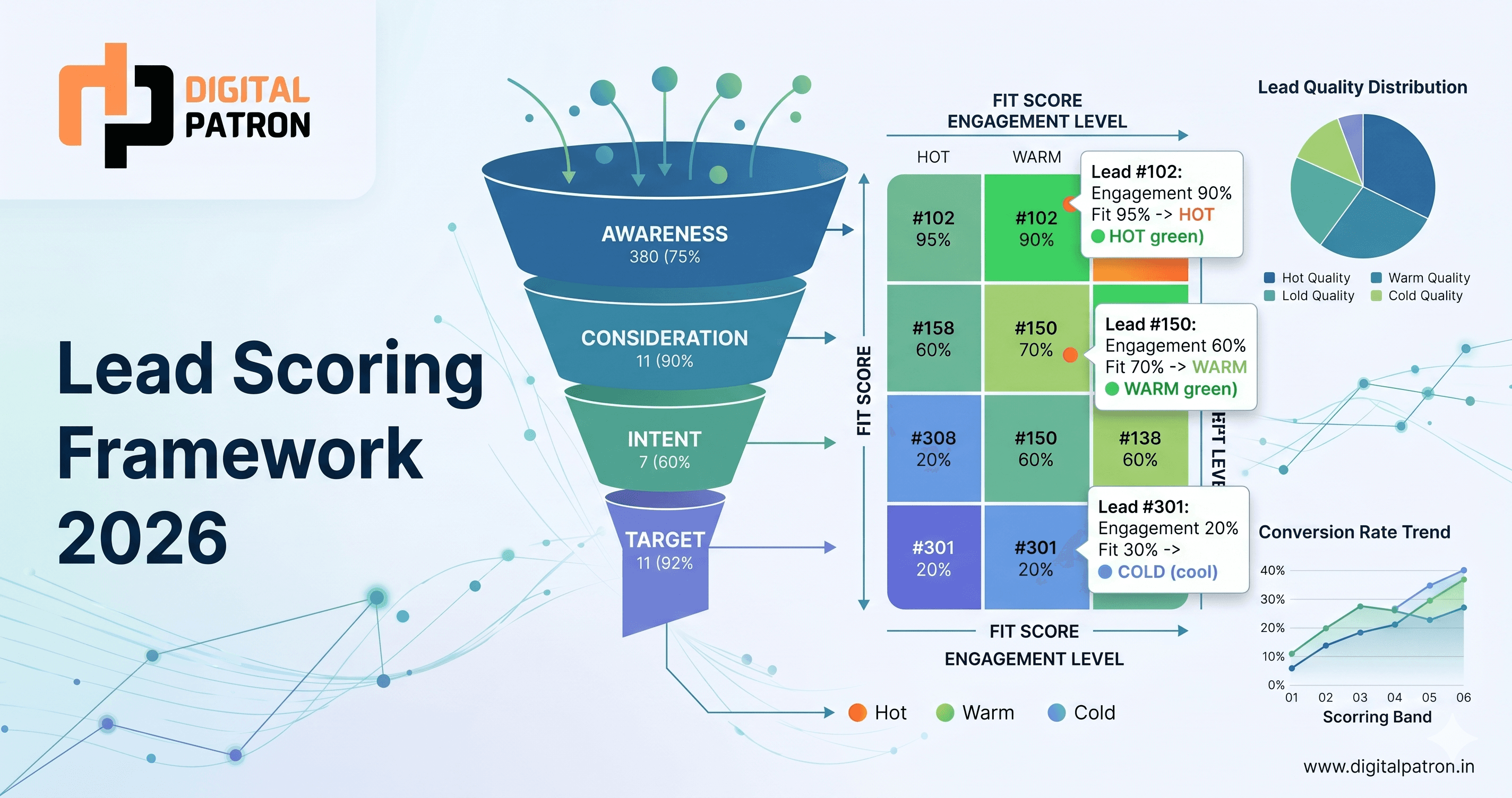
- Start with a few hundred accounts, not tens of thousands. Early outbound is research, and you learn more from 300 well-chosen companies than from 10,000 loosely chosen ones.
- Use a data tool (Apollo, Clay, LinkedIn Sales Navigator or similar) to find the accounts and one or two contacts per account in the role that owns the problem.
- Verify every email before it is loaded. Bounces are the fastest way to damage a new sending domain.
- Suppress investors, existing customers, open deals and anyone you already know personally. Those people get a personal note, not a sequence.
- Add one line of real context per account if you can: the trigger you saw, a product they use, a post they wrote.
3. Set up sending domains and deliverability before you write a word
Never send cold email from your main company domain. Register a few look-alike domains, create two or three mailboxes on each in Google Workspace or Microsoft 365, and set up SPF, DKIM and DMARC aligned to each domain. Google and Yahoo require bulk senders to authenticate their mail and to make unsubscribing easy, and unauthenticated cold email goes to spam. Then warm the mailboxes up for a couple of weeks before any campaign, and keep daily volume per mailbox low.
If your emails are already landing in spam, our seven fixes for cold emails going to spam covers the usual causes, and our email deliverability service sets up and repairs SPF, DKIM, DMARC and inbox placement for you.
If you email prospects in the US, follow the CAN-SPAM basics from the FTC's compliance guide: accurate From and subject lines, a valid physical postal address, a clear way to opt out, and opt-outs honoured within 10 business days (checked 1 Nov 2026). Other countries have their own rules; check them for your target market.
4. Write emails a stranger can answer in ten seconds
- Plain text, short. A few sentences, no images, no attachments, at most one link (better none in the first email).
- One problem, stated in the buyer's words. Lead with the situation they are in, not with your product.
- A reason for writing to them specifically. The trigger or signal from your list.
- A small ask. "Worth a 20-minute look?" or "Is this on your list this quarter?" beats a request for a demo.
- Founder voice. At this stage, an email from the founder who built the product is an asset. Use it honestly.
Write two or three versions of the first email, each built around a different problem or angle, and split the list between them. You are testing which pain gets a reply, not which subject line gets an open.
5. Add LinkedIn alongside email
Before the first email, view the prospect's profile and connect without a note or with one short line. After the second email, if they accepted, send a short message that does not repeat the email. Comment on their posts where you genuinely have something to add. Founders who post once or twice a week about the problem they solve find that prospects check their profile after an email, so make sure the profile says clearly who you help and how.
6. Follow up, then stop
Most replies come after the first email, not to it. A sequence of four touches over two to three weeks is a reasonable start: the first email, a short bump on the same thread, a new angle with a different problem or a short example, and a polite close-the-loop email. Then stop. Re-contact people later only if something has changed, such as a new trigger.
Reply to every positive or curious response within hours, not days. In early outbound, slow reply handling loses more meetings than weak copy does.
7. Watch the right metrics
| Metric | What it tells you | If it looks wrong |
|---|---|---|
| Bounce rate | List quality | Stop and re-verify the list before sending more |
| Inbox placement (seed tests) | Whether anyone can see your email | Check SPF, DKIM, DMARC, volume and warm-up before touching the copy |
| Reply rate, positive reply rate | Whether the problem and the ICP are right | Change the angle or the segment, not just the wording |
| Meetings booked and held | Whether the ask and the follow-up work | Make the ask smaller, reply faster |
| Meetings to paid customers | Whether the offer and price work | Listen to the objections on calls; this is a product question |
Open rates are unreliable because of privacy features in email clients, so do not steer by them.
8. Work backwards from 20 customers, with your own numbers
Here is the arithmetic with placeholder ratios. These are planning assumptions, not benchmarks: replace them with your own data after the first few hundred sends.
- Assume 1 in 4 held meetings becomes a paying customer. For 20 customers you need about 80 held meetings.
- Assume 1 in 2 positive replies becomes a held meeting. You need about 160 positive replies.
- Assume 1 positive reply per 100 contacts. You need roughly 16,000 contacts.
If that last number looks impossible for your niche, that is useful: it tells you to raise the reply rate (a sharper ICP and a better problem statement), raise the close rate (a better offer), or lean harder on referrals from each early customer, rather than to buy a bigger list. Run the same sum with your real numbers every two weeks.
How done-for-you outbound works
Tap a step
Step 1 of 5
ICP list
Decision-makers who match your ideal customer, pulled from Apollo and LinkedIn Sales Navigator and verified so bounces stay low.
Step 2 of 5
Warmed domains
Separate sending domains and mailboxes with SPF, DKIM and DMARC, warmed up before volume, so your main domain is never at risk.
Step 3 of 5
Personal sequence
3 to 5 emails per persona, with a LinkedIn touch to the same person. You approve every draft before anything is sent.
Step 4 of 5
Replies handled
Interested, not now and objections are sorted and answered the same day. Unsubscribes are honoured straight away.
Step 5 of 5
Meeting booked
The prospect gets a calendar invite with the context of the conversation, and you take the call.
Week-by-week: the first 8 weeks
| Week | What you do | What done looks like |
|---|---|---|
| 1 | Write the ICP and the trigger signals. Register sending domains, create mailboxes, set up SPF, DKIM and DMARC. Start warm-up. | A one-paragraph ICP, three or four visible signals, domains authenticated and warming |
| 2 | Build and verify the first list of a few hundred accounts. Write two or three first-email angles and the follow-ups. Tidy your LinkedIn profile. Set up a simple CRM or sheet. | Verified list loaded, sequences drafted, suppression list in place |
| 3 | First controlled send at low daily volume per mailbox. Start LinkedIn connection requests to the same people. | First emails out, no bounce or spam problems |
| 4 | Read every reply. Handle positive replies the same day. Take the first calls yourself. | First conversations held; notes on objections and language |
| 5 | Compare angles and segments. Drop the weakest angle. Rewrite with the words prospects used on calls. | One angle clearly ahead, or a decision to change the segment |
| 6 | Build the next list on the better segment. Raise volume slowly if deliverability is healthy. | Second batch live, inbox placement checked |
| 7 | Send proposals or start paid pilots from the best conversations. Ask each early customer for one introduction. | First paid customers or signed pilots; referral asks made |
| 8 | Review the funnel with your real ratios and redo the backwards sum. Decide: keep going yourself, hire, or hand the sending to an agency. | A written outbound plan for the next quarter |
Weeks one and two produce no replies, because no prospect has seen an email yet. That is normal, and it is why a one-month test of outbound usually ends just as the data starts.
When to hand it to an agency
Keep outbound founder-led until you can say, in one sentence, who buys, why now and what they say on the first call. Before that point, an agency would be guessing on your behalf. After it, the founder's time is better spent on calls and closing than on list building, domain warm-up and inbox management. Signs it is time:
- One message and one segment reliably produce meetings, and you want more of them.
- You are spending more hours on lists, mailboxes and follow-ups than on sales calls.
- Reply handling is slipping because you are busy with customers or the product.
- You are not ready for the cost and ramp time of a full-time SDR hire.
What should stay with the founder: the ICP decision, the offer, approving the copy and taking the sales calls.
Interactive
Is $800 a month for outbound worth it for you?
Move the sliders to your own numbers. These are your assumptions, not a forecast or a promise of results.
- Deals a month
- 0.8
- Return on fee
- 2.5x
- Deals to break even
- 0.32
Comfortably worth it on these numbers.
Digital Patron's outbound is $800 a month, 2-month minimum, no setup fee. The default of 8 meetings is the low end of our published 8 to 14 a month planning range, not a guarantee. Full prices on the pricing page.
The done-for-you option: Digital Patron
Digital Patron runs done-for-you cold email and AI SDR outbound for startups for $800 a month, 2-month minimum, no setup fee. That covers the ICP lead list, dedicated sending domains and mailboxes, SPF, DKIM and DMARC, warm-up, sequence copy you approve, sending and reply handling, with meetings booked onto your calendar; tool seats and data credits are additional. We do not sell pay-per-meeting. The 2-month minimum exists for the reason in the week-by-week table above: it is the shortest window in which a channel can be set up, calibrated once and judged on real replies. You keep the domains, lists and sequences if you stop.
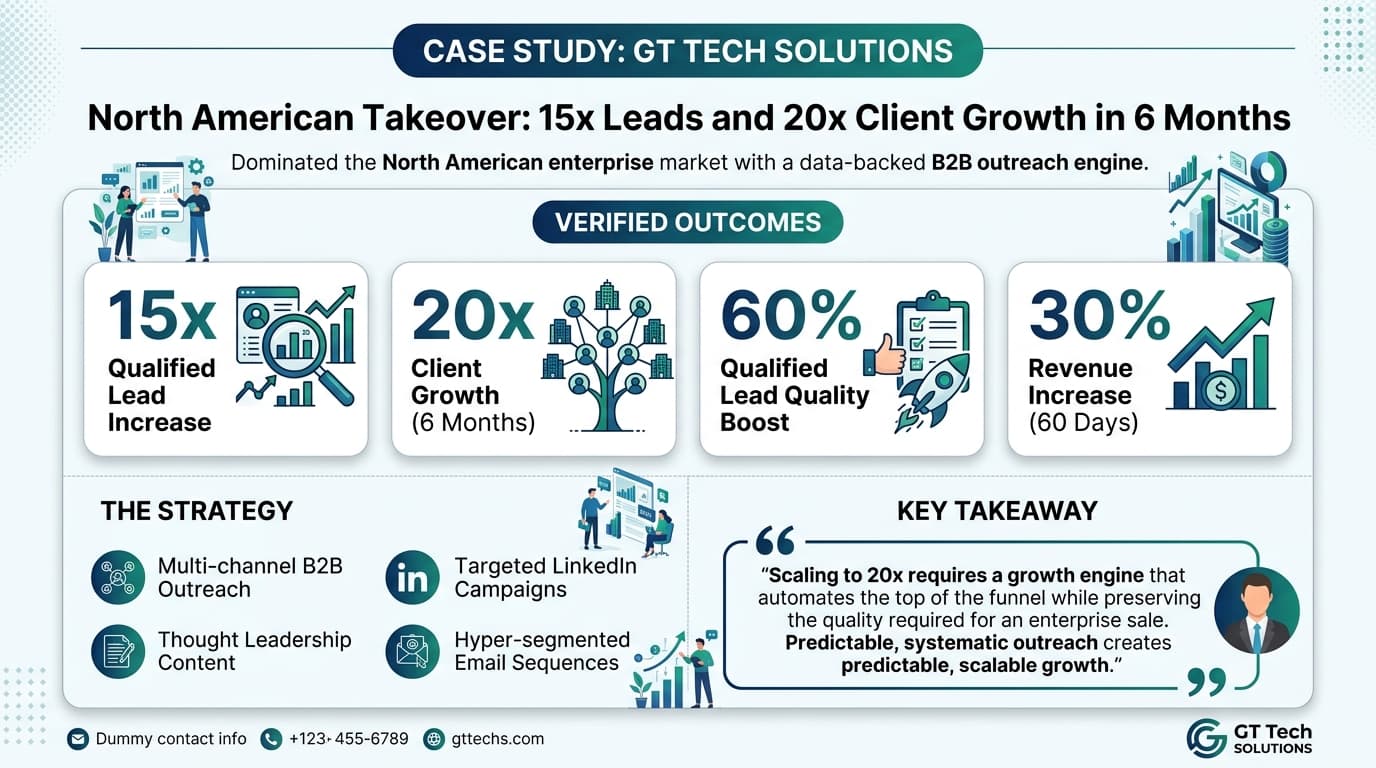
The documented proof is one client's result: an Austin, Texas B2B SaaS startup retired a $20,000 a month SDR team and booked 22 meetings in 21 days, with cost per meeting falling from $1,200 to $350. That is the Texas SaaS case study, one client's outcome, not an average. Our reviews are on Clutch.
See how the startup engagement works on our cold email agency for startups page, or the full service on cold email outreach. If you would rather test the targeting first, Rumo, our free AI SDR agent, reads your website, maps your ICP and delivers 20 B2B leads.
Frequently asked questions
How does a new B2B startup get its first customers?
Usually through founder-led sales: the founder contacts a narrow group of likely buyers directly by email and LinkedIn, takes every call, and learns which problem and which segment respond. Warm introductions and design partners help, but cold outbound is the channel a founder can start this week without an audience.
How long does it take to get the first 20 customers with cold email?
It depends on your price, sales cycle and market. The first two to three weeks go on domains, warm-up and list building, and useful reply data arrives a few weeks after the first send. Plan in months, not weeks, and recheck the plan with your own conversion numbers every two weeks.
Should the founder do outbound or hire an SDR first?
The founder first. Until you know who buys and why, an SDR or agency has nothing proven to scale. Once one message reliably books meetings, hand the list building, sending and follow-up to an SDR or an agency and keep the ICP, the offer and the sales calls.
How much does a cold email agency cost for a startup?
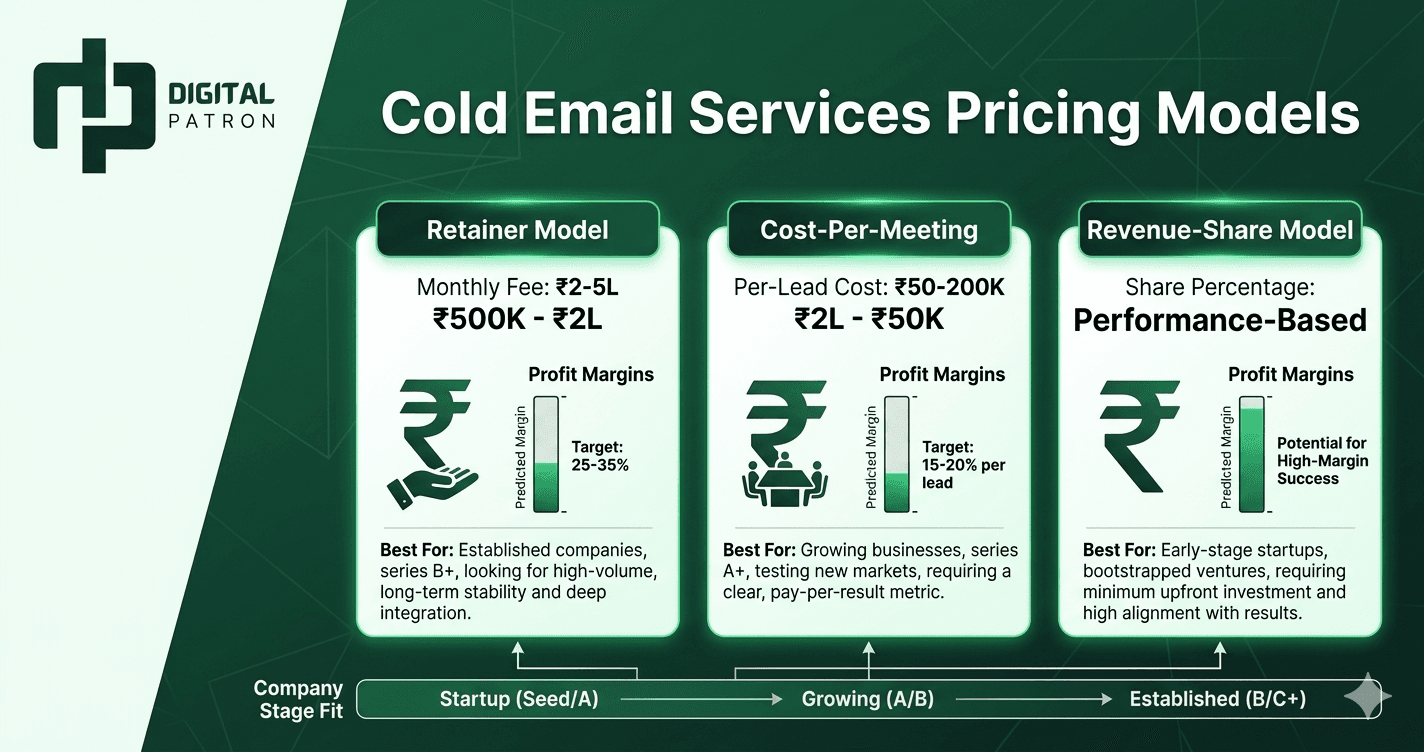
Pricing models vary: monthly retainers, pay-per-meeting and longer appointment-setting contracts. Digital Patron charges $800 a month with a 2-month minimum and no setup fee for done-for-you cold email and AI SDR outbound, and does not sell pay-per-meeting. Tool seats and data credits are additional.