
What is AI Sales Coaching? How It Replaced Our Sales Manager (2026)
The economics problem that AI sales coaching solves
A good sales manager costs ₹15–25 lakh per year. Their job is to listen to 3–5 calls per rep per week, identify what the rep did wrong (or right), and coach them in real-time. But most sales managers don't do this — they spend 60–70% of their time on admin, forecasting, and board updates.
So reps never get real feedback. They make the same objection-handling mistake 20 times before a manager notices. A rep loses a deal because they didn't ask about budget until the final call, and the manager only finds out in the post-mortem, when it's too late to coach the behaviour.
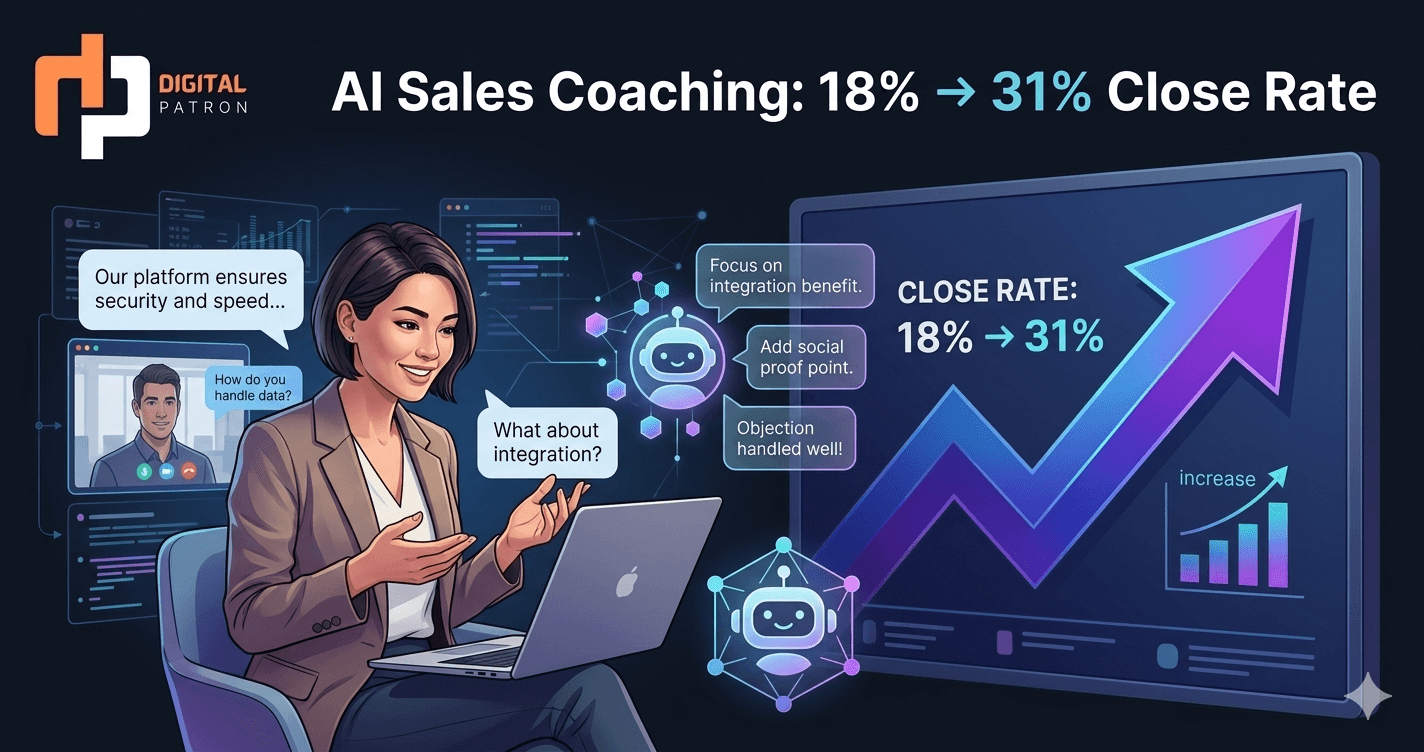
AI sales coaching solves this by recording every call, transcribing it, analyzing it, and surfacing actionable coaching in <5 minutes (vs. a manager's 30-minute post-call huddle that covers maybe 1 rep).
What AI sales coaching actually does
Automated call recording: Every demo, every discovery call is recorded and transcribed, with prospect consent handled according to the applicable sales call recording laws.
Instant insight extraction: The AI analyzes the transcript against patterns like:
- Did the rep ask budget questions in the first 5 minutes? (High-close teams do; low-close teams don't.)
- How many times did the rep interrupt the prospect? (Ideally 0–2 times per call; >4 times is a problem.)
- Did the rep give a demo before understanding the prospect's problem? (Worst anti-pattern.)
- Did the rep close with a clear next-step (not "let me think and get back to you")? (95% of reps fail this.)
- What objections came up? Did the rep handle them or get defensive?
- Did the rep talk more than 40% of the time? (If yes, they talked too much.)
Coaching assignment: Instead of a manager writing a 200-word email ("Hey, you dominated the call — let the prospect talk more next time"), the AI surfaces a specific 30-second video clip from the call ("Here's where you jumped in. What would happen if you stayed quiet for 10 more seconds?") and links it to a 2-minute training module on active listening.
Trend analysis: Over 4 weeks, the AI identifies: "Your team's biggest leak is not discovering budget before the demo. 6 out of 8 reps do this. Here's the new script to use."
The real results: close rate improvement
We implemented this for a Bangalore-based B2B SaaS company with 6 AEs in their sales org:
- Starting state: 18% demo-to-close rate across the team. Individual rep performance ranged from 10% (weakest) to 28% (strongest).
- Week 0–2: AI coaching deployed. Reps get 3–4 actionable insights per week (specific call clips + training modules). No manager intervention yet.
- Week 2–4: Weakest 2 reps (10% and 12% close rate) are assigned 15-minute weekly 1:1s where the manager uses AI insights to coach. Strongest 2 reps (25% and 28%) see minimal change (they were already doing the right things).
- Week 4–6: Close rate shifts. Weakest reps improve to 18–20% (85% improvement over 6 weeks). Middle performers hold steady at 16–22%. Strongest performers still at 28%+.
- Team close rate (demo to opportunity): 18% → 23.2% in 6 weeks. That's 10 additional closed deals per 200-demo cohort.
Revenue impact at $10K ACV: 10 extra deals × $10K = $100K incremental revenue in one cohort, from zero additional spend (just using AI insights the manager already had access to).
When AI sales coaching is better than a manager (and when it's worse)
AI is better at:
- Scale. A manager can listen to 5–10 calls per week and coach 2–3 reps. AI listens to 30+ calls per week and coaches all 6 reps.
- Consistency. A human manager coaches based on mood ("today I care about objection handling") or what's top-of-mind. AI grades every rep against the same 20 criteria, every call.
- Speed. Human feedback happens in post-call huddles (delays impact by 2–3 days). AI feedback is instant (rep sees coaching within 30 min of call end).
- Specificity. A manager might say "you didn't ask about timeline." AI says "at 14:23 of the call, you said 'so when does this go into budget cycle?' which is good, but you didn't follow up when the prospect was vague. Here's what a closer would've said [plays 10-second clip]."
AI is worse at:
- Relationship building. An AI tool cannot build trust or motivation. After the coaching insight, the manager still needs to have a 1:1 to reinforce and celebrate improvements.
- Strategic coaching. "You're not closing because your territory is under-qualified or our messaging is broken" — AI can't diagnose this. A manager and head of sales can.
- Handling exceptions. If a rep lost a deal because a CFO redirected budget to a competitor initiative (macro trend, not rep error), AI will flag it as "didn't ask about budget" and miss the real lesson.
The setup (2 weeks to live)
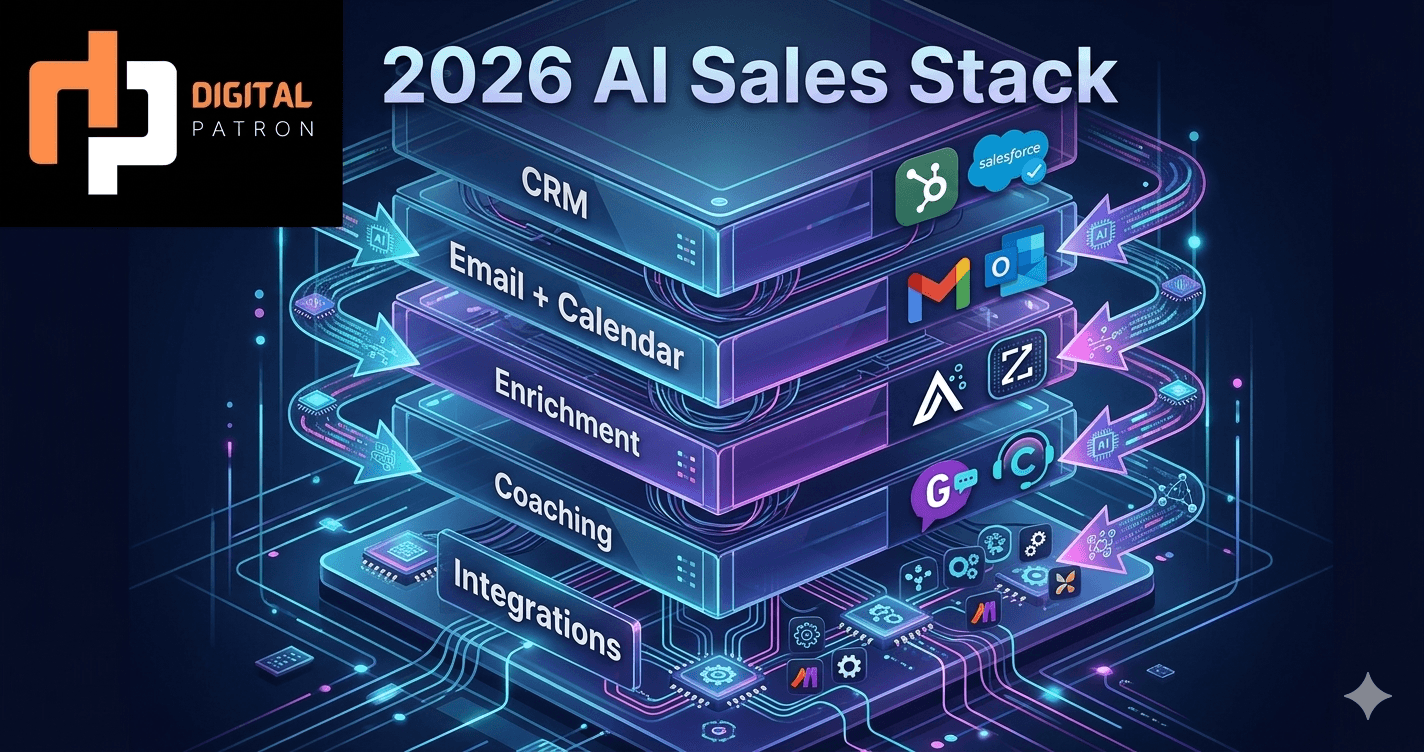
- Week 0–1: Deploy conversation intelligence tool (Gong, Chorus, Orum, or equivalent). Record all calls with prospect consent (update legal/compliance). Connect to Salesforce or CRM.
- Week 1–2: AI analyses the first 20–30 calls. Manager reviews insights and identifies team patterns. Start coaching with insights (not manager intuition).
- Week 2+: Ongoing cycle. Manager spends 20 min/week reviewing AI coaching summaries, assigns 2–3 reps per week for 1:1 coaching based on gaps.
Want to see if AI coaching will improve your team's close rate? Book a 20-min sales enablement audit. We'll review your last 10 calls and tell you where the biggest gaps are — and whether AI coaching or hiring a sales manager is the better move for your stage.