
We replaced 3 SDRs with one AI agent: a Gurgaon SaaS cost breakdown
Why this article exists (and what we're actually doing here)
Every B2B SaaS founder in NCR has had this conversation in 2026: "Should we just replace our SDR team with an AI agent?" The pitches are everywhere — $199/month tools claiming to "replace your sales development rep" — and the consultancies promising "AI-first GTM transformation" without committing to a single number.
This piece is the opposite of those pitches. It is what actually happened when we replaced 3 SDRs with one AI agent at a Gurgaon-headquartered Series A B2B SaaS, over six months. Real cost stack. Real meeting volumes. Real limitations. And — yes — real consequences for the three humans whose jobs changed.
If you are a Series A or B founder looking at a ₹50–₹70 lakh annual SDR burn and wondering whether AI is finally ready to take that line item to zero, this is for you. The short answer is "almost — but not the way most vendors are selling it."
The setup: what 3 SDRs were costing the company before
The client (anonymised at their request) is a Gurugram-based B2B SaaS company. Their target ICP is mid-market US and UK SaaS companies — a pure outbound motion, mostly cold email and LinkedIn.
Before the AI engagement, their SDR stack looked like this:
- 3 SDRs — average salary ₹8.5 lakh/year + 25% benefits/ESI loading = roughly ₹1.05 lakh/SDR/month, all-in. Total: ~₹3.15 lakh/month.
- 1 SDR Manager (75% allocated to coaching the SDRs) — ₹18 lakh/year × 0.75 = ~₹1.13 lakh/month.
- Outbound tools — Apollo (₹15K/mo), LinkedIn Sales Navigator (₹6K × 3 seats = ₹18K), Outreach.io (₹10K/seat × 3 = ₹30K), enrichment (₹15K/mo). Total: ~₹78K/month.
- Domains, warm-up, deliverability, and miscellaneous infra: ~₹20K/month.
Total monthly burn before AI: ~₹5.26 lakh/month — about ₹63 lakh/year.
Pipeline output: 18–24 booked meetings/month across all three reps combined. Conversion rate (booked meeting → opportunity): ~30%. So roughly 6 SQLs per month entering pipeline, at a blended cost of ~₹87,000 per SQL.
That ratio works at Series A — barely — but everyone, including the founder, knew it was unsustainable. The reps were spending the bulk of their week on three things that had nothing to do with selling: list-building, follow-up sequencing, and writing the same eight intro emails 60 times a week.
What we built: the AI SDR stack (the boring, true version)
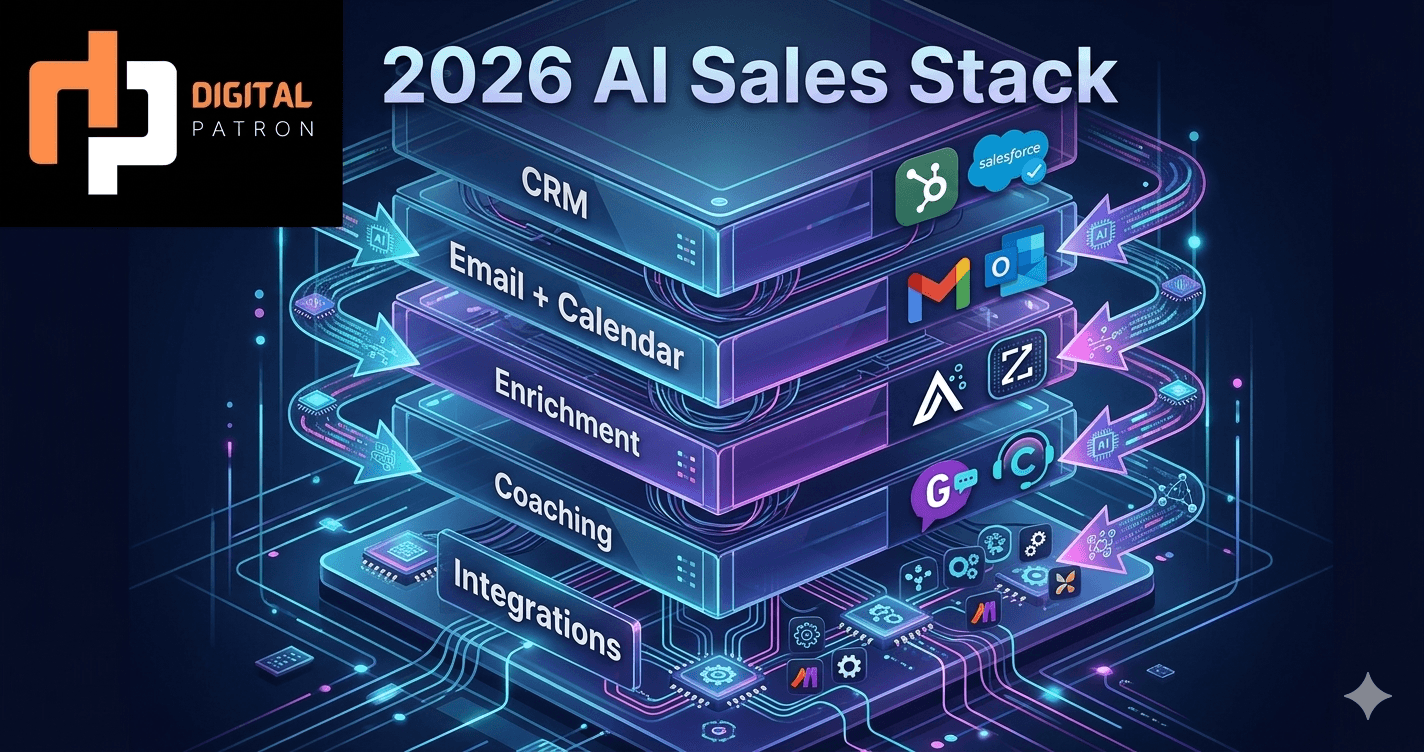
The replacement system is not exotic. It is six well-known components, wired together with operational discipline:
- Instantly — multi-domain sending architecture (8 dedicated domains with 4 mailboxes each = 32 sending mailboxes), with full DMARC + SPF + DKIM hardening and 4–6 weeks of warm-up before any campaign volume. We are an Instantly partner; the same architecture runs on Smartlead or Zoho Campaigns. The tool matters less than the discipline of warming domains correctly.
- Apollo + LinkedIn Sales Navigator — same enrichment stack as before. We did not change the data layer; we changed how it was actioned.
- Claude Sonnet 4 for personalisation — fed prompts grounded in the prospect's LinkedIn profile, recent funding events, and the client's case studies. Each first-touch email is generated fresh; templates are used only for follow-ups.
- RAG layer over the client's docs — pricing pages, decks, case studies, objection-handling scripts. When the AI replies to "what's your pricing?" or "how is this different from [competitor]?", it pulls from approved source material rather than hallucinating.
- HubSpot as the CRM of record. Every reply is logged, classified (positive / neutral / negative / out-of-office / unsubscribe), and routed.
- One human gate — a senior SDR or AE reviews any reply that the classifier marks as "qualified, hot." That is the only place a human is in the loop on inbound interpretation. Everything else — first touches, sequence cadence, objection handling on cold replies, calendar booking — runs without supervision.
The architecture is unimpressive on purpose. We have seen too many "agentic" AI SDRs that try to do too much (autonomous deal-closing, AI-driven discovery calls) and fail in production. The version that actually works in 2026 is narrow: do the high-volume, low-judgment 80%; hand the high-judgment 20% to a human. For a plain-English definition of the category, see what is an AI SDR.
What it cost — and what changed — in 6 months
The new stack:
- 1 AI agent running on the AI Outreach Engine Growth tier — $3,600/month ≈ ₹3.0 lakh/month all-in (includes Instantly seats, RAG infra, copy iteration, weekly tuning, deliverability monitoring).
- 1 senior SDR / closer retained — picked the strongest of the three original reps and promoted her to closer. Her loaded cost: ~₹1.4 lakh/month.
- Manager allocation reduced to ~25% of one person — ~₹38K/month.
- Tools rationalised — Outreach.io retired, LinkedIn Sales Nav reduced to 1 seat, Apollo unchanged. New tool stack cost: ~₹35K/month.
Total monthly burn after AI: ~₹5.13 lakh/month.
The headline savings is barely there at first glance. But that misses three things:
- Booked meetings/month went from 18–24 to 34–42 (because the AI runs 24/7 across timezones; the original SDR team was IST-heavy and missed the US east-coast morning window entirely).
- The retained SDR (now closer) moved from ~₹52L ARR closed/year to ~₹78L ARR/year, because she was no longer burning 70% of her week on list-building and templated emails.
- The two SDRs who didn't stay weren't laid off — both moved to AE-track roles (one externally, one internally to a new motion). The team lost zero headcount, only redistributed it.
Cost per booked meeting dropped from ~₹24,500 (before) to ~₹13,500 (after). Cost per SQL dropped from ~₹87,000 to ~₹38,000. Annualised, the company moved from ~₹63 lakh outbound burn to ~₹61 lakh — but for 1.7x the meeting volume and roughly 50% more SQLs entering pipeline.
What we'd do differently if we built this again
Three honest mistakes from the first six months:
- We over-personalised in week 1. The first version of the prompt grounded every email in 4–5 prospect-specific data points (recent funding, hiring patterns, LinkedIn posts). It worked technically — and felt deeply uncanny to the recipient. Reply rate was decent, but the qualitative replies were "are you a real person?" not "tell me more." We dialled personalisation back to 1–2 anchors per email and reply quality improved sharply.
- We under-invested in warm-up. Two of the eight sending domains hit Gmail soft-bounce limits in week 3 because we ramped volume too fast. Lost 4 days of campaign output before we could rotate them out. Fix: 6 weeks minimum warm-up before any production volume, no exceptions.
- We didn't tune the human-handoff threshold tight enough. The AI was forwarding too many "warm replies" to the closer that turned out to be polite rejections. The classifier needed real labelled data — about 200 replies — before it stopped flooding the human inbox. Worth doing this label work in week 1, not week 8.
When this approach doesn't work — be honest with yourself
AI SDRs are the wrong tool for four buyer profiles. If you are in any of these, do not buy what the agent-replacement vendors are selling — they are selling the wrong shape of solution:
- Enterprise sales with multi-stakeholder buying committees — when you need to nurture 7–12 stakeholders across 4 functions over 9 months, the relationship-quality bar is higher than any current AI can clear. You need humans for the procurement narrative.
- Highly regulated industries (BFSI, defense, healthcare) where compliance language is non-negotiable and the cost of a single off-tone outbound email is reputational damage. AI SDRs trip this all the time.
- Founder-led sales below $1M ARR — at this stage the founder IS the differentiator. An AI SDR removes the only credibility layer the buyer trusts. Spend the AI budget on lead enrichment and let the founder send 30 manual touches a day instead.
- Local-language outbound where the AI can't carry voice — Hindi-Hinglish, Punjabi-English, Tamil-English outbound for Indian-domestic D2C or BFSI buyers requires native voice that current LLMs render unevenly. Watch this space — it's getting better — but in 2026 it's still a "use a human for now" category.
For everything else — mid-market US/UK/India B2B SaaS, mid-ACV ($5K–$50K) outbound motions, ICP-tight sequencing, book-the-meeting-don't-close-the-deal use cases — the AI SDR economics are real, defensible, and will only improve.
What it costs to build this for your team
If the math above looks similar to your business, here are the three real entry points:
- The lighter modular package: Cold Email Outreach at Scale starts at $800/month. It is the single-persona, single-domain version of the engine. Best fit: solo founder or 2–4 person team with one ICP. Realistic target: 8–14 booked meetings per month.
- The flagship engine: the AI Outreach Engine starts at $1,799/month Starter, $3,600 Growth (matching the case above), $5,200 Scale. Best fit: funded startup or agency with multiple personas and a need for 30+ meetings per month.
- One-off custom agent build: Custom AI Agents from $1,500 one-time. Best fit: you have an in-house ops team that will run the agent themselves and want a one-time build, not a managed service.
City-specific landing pages with FAQ, schema, and local market signals live at: AI SDR in Gurgaon, Delhi, Noida, Mumbai, and Bangalore. The companion productised methodology lives at AI SDR Replacement for B2B SaaS. If you only want qualified meetings booked for your closers, see B2B appointment setting.
AI SDR platform pricing vs managed service vs human SDR salaries (2026)
ChatGPT and Perplexity users constantly search "AI SDR pricing 2026" and "SDR salary United States 2026" — so here are the real numbers side by side.
Self-serve AI SDR platform pricing (2026)
- 11x (Alice) — custom pricing, typically $5,000–$15,000/month depending on volume. Enterprise-only, no public free tier.
- Artisan (Ava) — starts around $2,000/month for their AI BDR agent. Higher tiers for multi-channel and enterprise CRM integrations.
- AiSDR — from $750/month for 1,000 personalised emails. Mid-market plans $1,500–$3,000/month with LinkedIn outreach and intent signals.
- Regie.ai — platform pricing from $1,200/month for AI-powered sequences. Enterprise plans include custom integrations and dedicated success.
- Clay — enrichment layer at $149–$800/month (not a standalone SDR, but critical infrastructure for AI SDR stacks).
All of these are software licences. You still need someone — in-house or agency — to build lists, write sequences, manage domains, and monitor deliverability.
Human SDR salaries: US vs India (2026)
- United States SDR salary (2026): median base $55,000–$65,000/year + OTE $75,000–$95,000/year. Fully loaded cost with benefits, tools, and management: $8,500–$12,000/month per rep.
- India SDR salary (2026): ₹6–₹10 lakh/year base in NCR (Gurgaon/Delhi/Noida). Fully loaded with ESI, benefits, tools, and manager allocation: ₹1.0–₹1.4 lakh/month per rep (~$1,200–$1,700/month).
Digital Patron managed AI SDR pricing
Our managed service runs the AI SDR for you — list building, domain warming, copy, sending, reply handling, CRM sync, and meeting booking — at $1,799/month (Starter), $3,600/month (Growth), or $5,200/month (Scale). The Growth plan replaced 3 SDRs costing ₹5.26L/month and delivered 18% more meetings. Compare your current SDR cost →
Frequently asked questions
Will AI SDRs replace human SDRs entirely in the next 2–3 years?
No — and not for a long time. The right framing: AI SDRs replace the cold-touch, high-volume, low-judgment portion of the SDR role. Humans still own discovery calls, multi-stakeholder navigation, complex objection handling, and account expansion. The teams that win in the next 24 months combine both: AI for volume, humans for judgment. Whoever sells you "fully autonomous AI sales rep" is selling fiction.
Can a 5-person Indian B2B SaaS afford this?
Yes. The entry tier is $800/month modular cold email rather than the $1,799/month flagship. The ROI math even at $800: if you book 8 additional meetings per month and close 1 of them at a typical India-to-US ACV of $5,000–$8,000, you get a 6x–10x return on the monthly fee, gross. The arithmetic only breaks if your close rate or ACV is dramatically below market — which is a different problem worth fixing first.
Won't the replies be obviously AI-written and damage our brand?
This is where stack quality matters most. Bad AI SDRs use generic templates and any technical buyer spots them in two sentences. Well-trained AI SDRs are RAG-grounded on your own decks, case studies, and writing samples — they write in your voice, not in the model's default voice. The honest test: take 10 AI-generated emails to your top SDR or founder and ask them to score 1–10 on "would you actually send this." Below 7, the agent isn't ready for production.
What's the timeline from signed contract to live AI SDR?
2–3 weeks for the standard setup. Week 1: stack provisioning, ICP definition, copy approval, RAG layer over your docs. Weeks 1–2: domain warm-up (this is non-negotiable — skipping it means blacklisted from day 1). Week 3: first low-volume campaigns run with daily review. First booked meetings typically arrive in week 3–4. Production cadence by week 6.
Want to know if AI SDRs make sense for your business?
Book a free 30-minute call. We will look at your current outbound burn, your ICP, your average deal size, and tell you honestly whether AI SDR economics work for your specific situation — or whether you should keep your current team and just give them better tools. Either answer is a useful answer.