
Short answer: choose WordPress if your website is mainly a content site, your marketing team needs to publish without a developer, and your budget is tight. Choose Next.js if the website is part of your product or sales system, needs custom integrations or hundreds of generated pages, or has to be consistently fast on mobile. If you want both a familiar editor and a fast custom front end, headless WordPress (WordPress for content, Next.js for the site) is a sensible middle path. Search engines do not prefer either platform; they prefer well-built pages.
We build mostly on Next.js, including this website, so we have a bias. We also recommend WordPress to clients regularly, and we will say below exactly when.
What each one actually is
WordPress is a content management system written in PHP. You install it on a server, choose a theme for the design and add plugins for features such as forms, SEO fields, caching and security. W3Techs has for years reported it running over 40% of all websites, which means a huge ecosystem, cheap hosting and developers in every Indian city.
Next.js is a framework for building websites and web applications with React, maintained by Vercel. There is no admin panel out of the box; developers build the site in code and connect a CMS if editors need one. It can render pages on the server, generate them ahead of time, or mix both, which gives fine control over speed and what search engines see.
So the comparison is not quite like for like. WordPress is a product you configure. Next.js is a toolkit you build with. That difference explains most of the trade-offs below.
Side-by-side comparison
| Factor | WordPress | Next.js |
|---|---|---|
| Initial build cost | Lower, especially with a theme | Higher; everything is built for your site |
| Editing by marketing | Built in and familiar | Needs a headless CMS (Sanity, Payload, headless WordPress) or developer changes |
| Speed on mobile | Can be fast; often slowed by themes and plugins | Fast by default if built with discipline |
| SEO control | Good via plugins, limited by theme markup | Complete control over HTML, schema, routing and rendering |
| Security upkeep | Core, theme and plugin updates needed regularly | Smaller attack surface; dependency updates still needed |
| Hosting | Cheap shared hosting to managed WordPress | Node hosting, containers or platforms such as Vercel |
| Hiring in India | Very large talent pool | Large React pool; fewer developers with deep Next.js experience |
| Custom integrations | Via plugins or custom PHP | Natural fit; APIs and business logic live with the site |
| Generated pages at scale | Possible, often clumsy | Straightforward from a data source |
Speed and Core Web Vitals
Google measures page experience with Core Web Vitals: Largest Contentful Paint (good is 2.5 seconds or less), Interaction to Next Paint (200 milliseconds or less) and Cumulative Layout Shift (0.1 or less). These matter more in India than in many markets because so much B2B research happens on phones over variable mobile connections.
A carefully built WordPress site on good hosting can pass all three. The problem is entropy. Each plugin adds scripts and styles, page builders add heavy markup, and two years in, a site that launched fast often is not. Next.js gives developers tools that make fast pages the default: server rendering, automatic code splitting, image optimisation and font handling. It can also produce slow sites if a team ships large client-side bundles and animation libraries everywhere. The framework helps; discipline decides.
SEO: neither platform ranks you
Google has said repeatedly that it does not favour any CMS. What it rewards is content that answers searches, pages it can crawl and render reliably, sensible internal links and a good experience. The real SEO difference between the platforms is control:
- On WordPress, SEO plugins handle titles, meta descriptions, sitemaps and basic schema well. You are limited by how your theme structures headings and markup, and complex structured data usually needs custom work.
- On Next.js, you control every tag, every schema block and every URL, and pages are rendered on the server so search engines and AI crawlers see complete HTML. You also have to build the things a plugin would give you, such as sitemaps, redirects and metadata fields.
One risk worth naming: a React site built to render only in the browser can hide content from crawlers. Next.js avoids this when pages are server-rendered or pre-generated, which is how we build. If a vendor proposes a React site, ask how pages are rendered.
Security and maintenance
Vulnerability trackers such as Wordfence and Patchstack consistently report that the large majority of WordPress vulnerabilities sit in plugins and themes, not in WordPress core. That is manageable with a maintenance routine (updates, backups, a security plugin, and pruning plugins you do not need), but it has to actually happen every month. A Next.js site has no public admin login or plugin directory to attack, which removes a large class of problems. It still has dependencies that need updating, and changes usually require a developer rather than an admin clicking "update".
Cost over three years
WordPress is usually cheaper to launch. Next.js usually costs more upfront, often meaningfully so for a custom build. Over three years the gap narrows: WordPress sites tend to accumulate plugin licences, maintenance hours and eventually a redesign when the theme ages, while a well-built Next.js site tends to need fewer emergency fixes but more developer time for content-model changes. For typical cost bands, see our website development cost guide.
When WordPress is the right choice
- The site is mainly content: a blog, a publication, a services firm with pages that change weekly.
- Non-technical editors need to publish, rearrange pages and build landing pages themselves.
- The budget is under roughly ₹3 lakh and speed to launch matters more than custom features.
- You want to hire or replace a developer easily anywhere in India.
- You need a specific plugin ecosystem, such as WooCommerce for a modest store or an LMS plugin.
When Next.js is the right choice
- The website is part of your product: logged-in areas, dashboards, calculators, configurators or a customer portal.
- You need many pages generated from data, for example service-by-city pages, product catalogues or integration directories.
- Integrations with your CRM, product APIs or internal systems are central, not occasional.
- Consistent mobile speed and precise control of schema and rendering matter for SEO and AI-search visibility.
- You have, or will retain, developers to maintain it.
The middle path: headless WordPress
Headless means WordPress is used only as the editing back end and Next.js renders the public site from WordPress's API. Editors keep the interface they know; visitors get a fast custom front end; and the public site has no WordPress login to attack. The costs are a more complex setup, two systems to host, and some WordPress features (page builders, many front-end plugins) that no longer apply. It suits teams that already know WordPress and have outgrown their theme. Purpose-built headless CMSs such as Sanity or Payload are often a cleaner choice for new builds.
What we chose for our own site, and why
This website runs on Next.js with TypeScript, deployed to Azure Container Apps through GitHub Actions. We chose it because the site is partly generated from data: our service-by-city pages for places like Gurugram, Mohali and Chandigarh come from one structured file, so adding a city or a service is a data change rather than a design job. We also wanted full control over schema and server rendering for AI search. Content changes go through developers, which suits us and would not suit every marketing team.
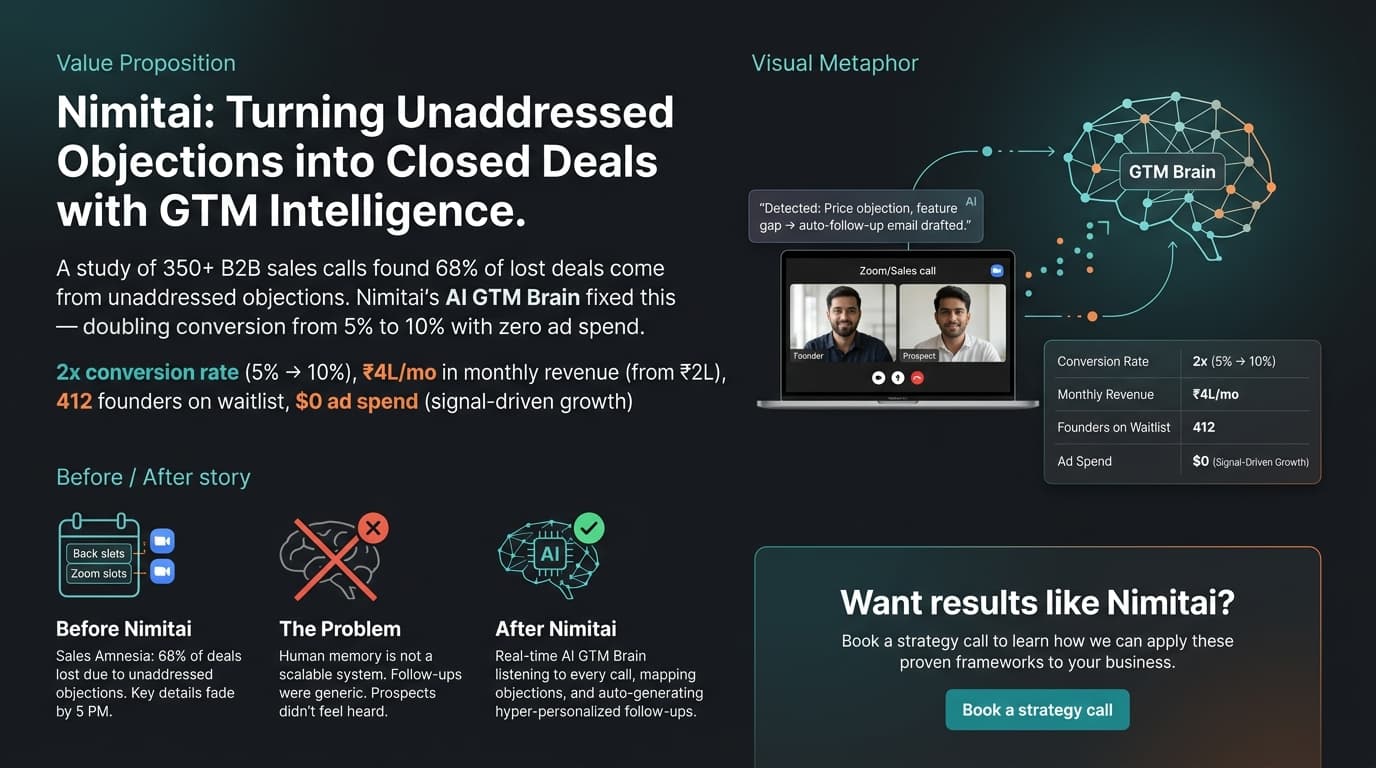
For client work the same logic applies. The Nimitai product we built (case study) runs on Next.js, TypeScript, PostgreSQL and Prisma because it is an application. A ten-page site for a professional services firm that blogs every week might be better on WordPress, and we will say so.
Migrating from WordPress to Next.js without losing rankings
- Export every URL with traffic or backlinks from Search Console and your analytics.
- Keep URLs identical where you can; map every changed URL to a 301 redirect.
- Carry over titles, meta descriptions, headings and structured data, then improve them.
- Move images with their alt text and make sure the new image URLs are crawlable.
- Test the staging site with a crawler before launch, then submit the new sitemap and watch Search Console coverage and queries daily for the first weeks.
FAQ: Next.js vs WordPress
Is Next.js better than WordPress for SEO?
Not automatically. Next.js gives more control over rendering, markup and schema, and makes fast pages easier, which helps SEO when the team uses that control well. A well-maintained WordPress site with good content will outrank a careless Next.js build every time.
Is Next.js more expensive than WordPress in India?
Usually yes to build, because the site is developed rather than configured. Maintenance can be cheaper or more expensive depending on how often content structures change and whether you have developers available.
Can my marketing team edit a Next.js website?
Yes, if the build includes a headless CMS such as Sanity, Payload or headless WordPress. Editors then work in a familiar interface while developers control the templates. Without a CMS, every change needs a developer.
Should a startup choose WordPress or Next.js?
If the website is a marketing site and the product lives elsewhere, start with whatever lets you publish fastest, often WordPress or Webflow. If the website and product are closely linked, or you plan many generated pages, start on Next.js to avoid a rebuild later.
Is WordPress still safe to use in 2026?
Yes, with discipline: keep core, theme and plugins updated, use few and reputable plugins, take regular backups and restrict admin access. Most problems come from neglected sites, not from WordPress itself.
Not sure which fits your team?
Tell us what your website needs to do, who will update it and what systems it must connect to. We will recommend a platform, including when that means WordPress, and give you a fixed-scope quote. See our web development approach or book a free discovery call.