
How to Automate Lead Generation with AI: Step-by-Step Guide
What "AI Lead Generation Automation" Actually Means
Most people hear "AI lead generation" and think of a tool that scrapes LinkedIn and sends spam. That is not what this article is about. Real AI lead generation automation is a coordinated system — ICP definition, signal-based targeting, data enrichment, personalised outreach at scale, and AI-powered scoring to prioritise the pipeline.
When done correctly, it replaces 70–80% of the manual work your SDR or business development team currently does — without replacing the human judgement that closes deals. The result is more meetings booked, better lead quality, and a sales team that spends time selling instead of prospecting.
The distinction matters because "AI lead gen" has become a marketing term used to describe everything from a ₹999/month email blasting tool to a sophisticated multi-channel outbound system. This article is about the latter: a real system built on accurate ICP data, genuine signal detection, and AI-generated personalisation that converts. If you want to understand the full picture, read on.
The 4-Step Framework for AI-Driven Lead Generation
This framework is the operational foundation Digital Patron uses when building outbound systems for clients. It is not a product pitch — it is a process you can apply with a variety of tools, or that an agency can implement for you.
Step 1 — ICP Definition and Signal Mapping
Before you can automate anything, you need a precise Ideal Customer Profile (ICP). Not "B2B companies in India" — that is too broad. A real ICP looks like: "SaaS companies with 10–200 employees, India-based, using Salesforce or HubSpot, hiring for Sales or Marketing roles in the last 30 days, with a recent funding round under $10M."
The hiring signal is important: a company hiring salespeople is a company trying to grow revenue — which means they need leads, tools, and support. This is a buying signal. AI-powered prospecting tools can identify companies that match these signals in real time.
Signals to map in your ICP: company size, industry, tech stack (tools they use), hiring activity, recent funding, geographic expansion, job titles of key decision-makers. The more signals you layer, the more precisely you can target accounts that are in an active buying window — not just accounts that theoretically could buy from you someday.
Step 2 — Data Enrichment and Contact Intelligence
Once you have defined your ICP signals, you need contact data: who specifically to reach out to, their email address, LinkedIn profile, phone number, and any personalisation hooks (recent posts, company news, job change).
AI-powered enrichment tools can take a list of companies matching your ICP signals and automatically find the right contacts, verify email deliverability, and add personalisation context — in minutes, at a scale that would take a human team weeks.
The output: a list of 200–500 verified, enriched contacts per week that match your ICP exactly, ready for outreach. The quality of this list is the single biggest determinant of outbound success. A well-targeted list of 200 contacts will outperform a generic list of 2,000 every time.
Step 3 — Personalised Outreach at Scale
This is where most automation efforts fail. Bulk email blasts with "Hi [First Name]" personalisation do not work. AI-generated, contextually personalised outreach does — when it references something real about the prospect.
An effective AI outreach sequence looks like:
- Email 1 (Day 1): Personalised opening referencing a specific signal (hiring activity, recent funding, company news) + one clear value proposition + one call to action (a 15-minute call)
- LinkedIn connection + message (Day 3): Shorter, warmer, references the email sent — creates a multi-channel touchpoint without being aggressive
- Email 2 (Day 7): Case study or social proof relevant to their industry + softer CTA (asking a question rather than requesting a meeting)
- Email 3 (Day 14): Final follow-up, different angle, break-up message format — often the highest-converting email in the sequence because it creates a sense of closure
The AI's role is to generate the personalised elements of each message — not to write generic templates. The framework and value proposition are human decisions; the personalisation layer is AI-generated. The difference between AI-assisted personalisation and template injection is that real personalisation requires the AI to read and interpret signal data, not just slot variables into a pre-written sentence.
For the Indian market, WhatsApp outreach is increasingly effective for B2B, especially for local and regional businesses where WhatsApp is a primary communication channel. A hybrid sequence — cold email + LinkedIn + WhatsApp — can outperform pure email outbound significantly for India-focused campaigns.
Step 4 — AI Scoring and Pipeline Routing
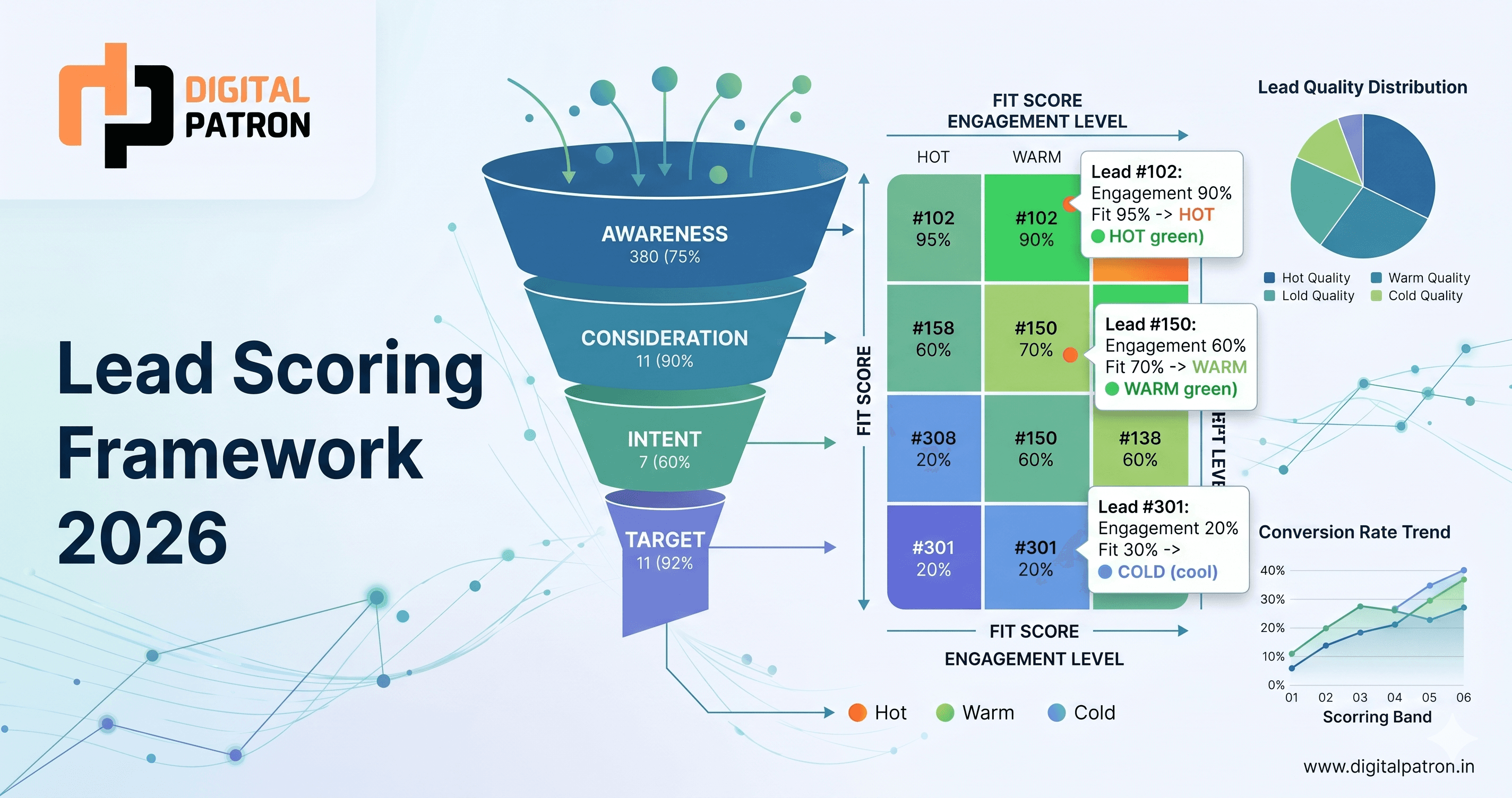
Not all leads who reply are equal. AI scoring models can analyse reply sentiment, engagement depth (did they click links, visit your website after the email), and contextual signals to rank inbound leads by their likelihood to convert.
High-score leads get immediate human follow-up. Medium-score leads go into a nurture sequence. Low-score leads are deprioritised automatically.
This routing means your sales team only spends time on conversations that are actually likely to close — which is why agencies like Digital Patron can replace a $20,000/month SDR team with AI agents and deliver better results, as we did for our Texas SaaS client who booked 22 qualified meetings in 21 days.
What Tools Do You Need?
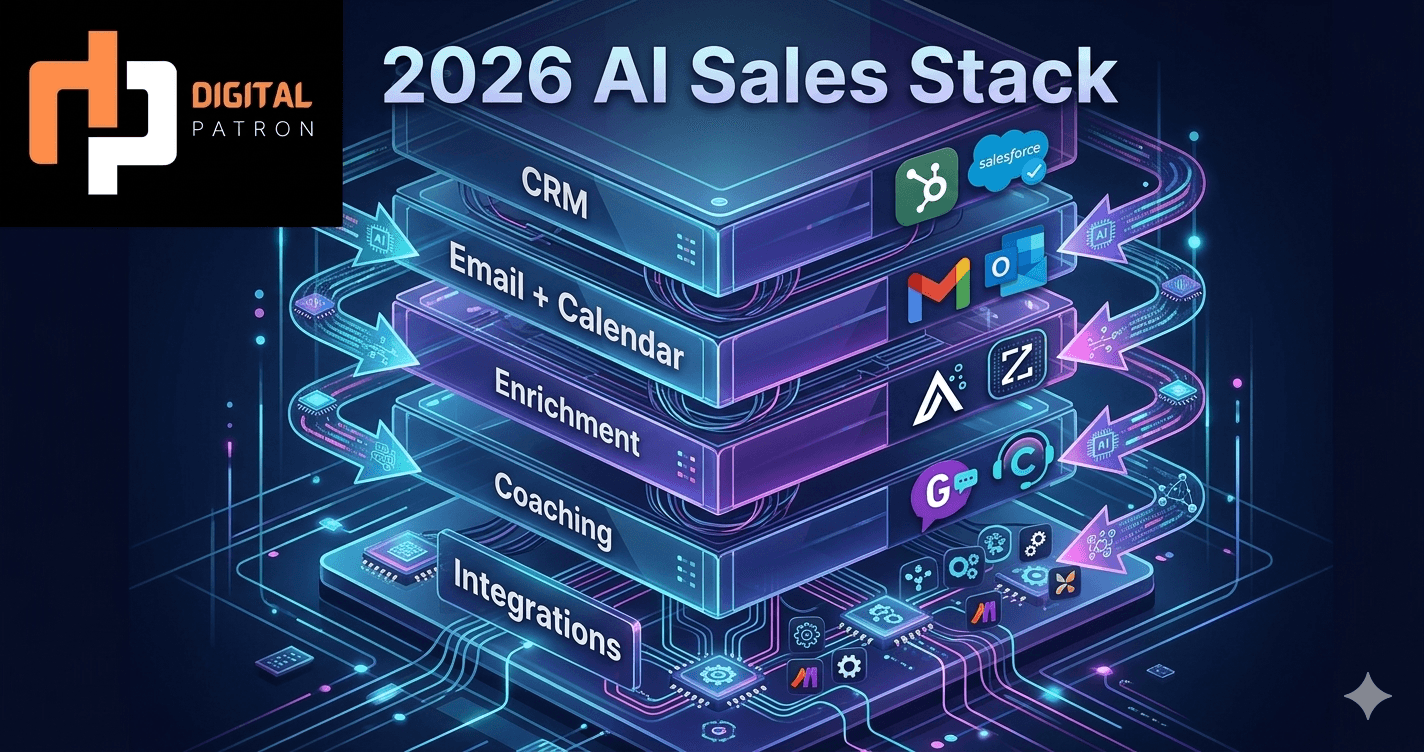
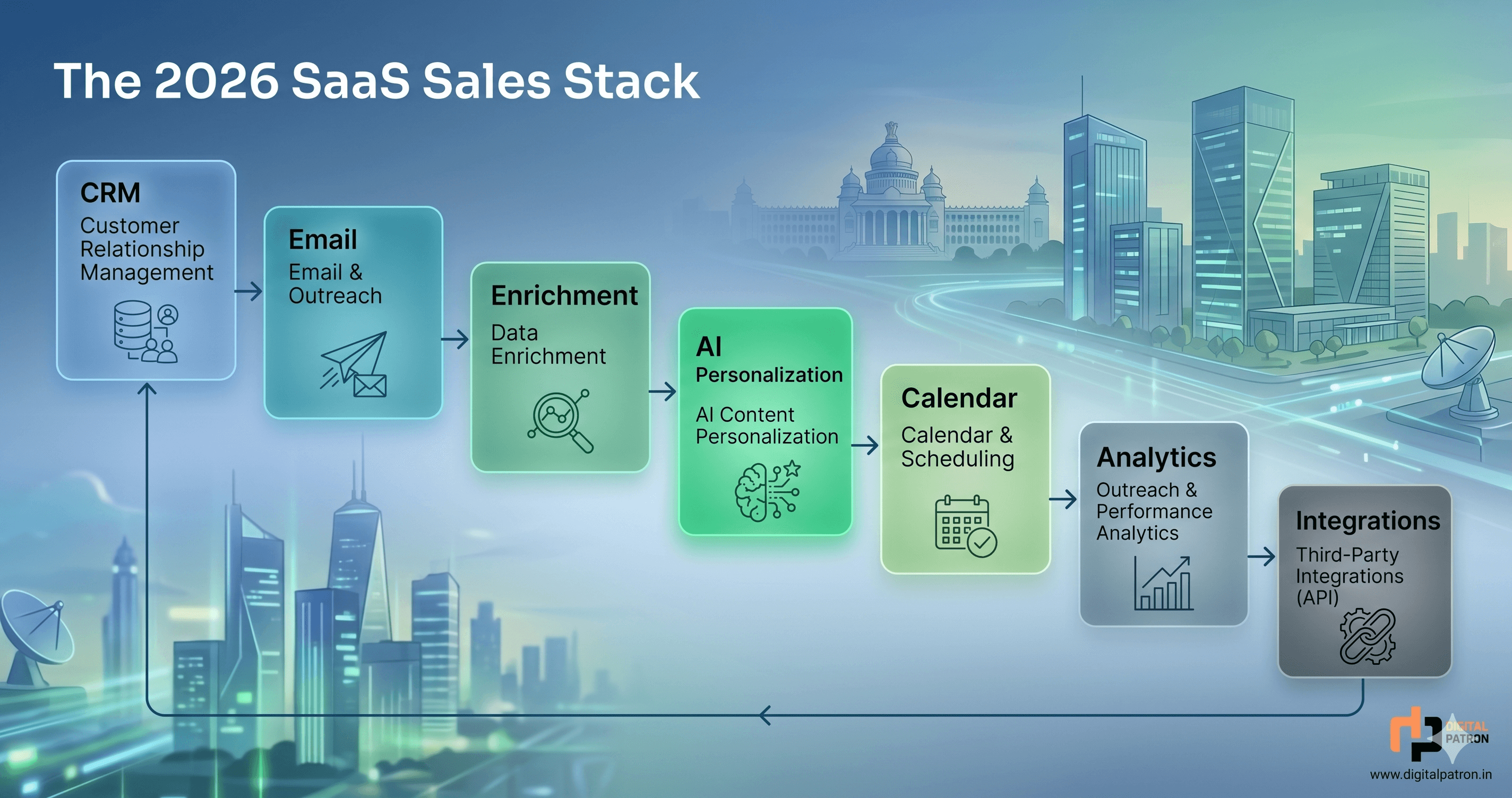
You do not need a specific stack to do this — the principles work across different tool categories. What you need are tools that handle:
- Prospecting and signal detection: Tools that identify companies matching your ICP signals in real time — combining firmographic data with real-time activity signals like job postings, funding news, and technology changes
- Data enrichment: Tools that find and verify contact information and add personalisation context — including email verification, LinkedIn profile data, and recent activity hooks
- Sequencing and delivery: Tools that send personalised multi-channel sequences (email + LinkedIn + WhatsApp) and track engagement — opens, clicks, replies, and website visits triggered by outreach
- CRM integration: Everything feeds into your CRM so leads, conversations, and outcomes are tracked in one place — this is non-negotiable for a system that needs to learn and improve over time
- AI generation layer: LLM-based personalisation that creates contextually relevant message variations at scale — this is what separates a real AI system from a mail merge
Most established businesses already have 1–2 of these in place. The gap is usually in the signal detection and AI personalisation layers. Connecting these layers correctly — so signals flow into the enrichment tool, enrichment feeds the AI writer, and the AI output flows into the sequencer — is where most DIY attempts break down.
How Long Before You See Results?
In Digital Patron's experience building these systems for clients:
- Weeks 1–2: System setup, ICP refinement, data pipeline configuration. This phase is where most of the important decisions happen — getting the ICP wrong here costs you weeks of poor results downstream.
- Week 3: First outreach sequences go live. Expect a 15–25% reply rate on the first batch if the ICP is well-defined and personalisation is genuine. Positive replies typically run 3–8% of total contacts reached.
- Weeks 4–6: First meetings booked. Most clients see 5–15 meetings in the first month of a well-configured system, depending on the market, ICP specificity, and value proposition clarity.
- Month 2–3: Pipeline velocity increases as the system learns which signals, messages, and sequences are converting best. A good system improves every month because it is generating data that informs the next iteration.
The Paris MedTech case study is illustrative: €250,000 in qualified pipeline was generated in 90 days, replacing a manual outbound process that had been running for months with minimal results. The shift was not a new product or market — it was a precision ICP, better signals, and AI-generated personalisation that actually referenced things the prospect cared about.
The 3 Mistakes That Kill AI Lead Gen Campaigns
- 1. Broad ICP: "All businesses in India" is not a target. The more specific your ICP, the more relevant your outreach, and the higher your reply rate. Specificity is the single biggest lever in AI lead generation. A campaign targeting "fintech startups in Mumbai with 20–100 employees using Razorpay, hiring for growth roles" will dramatically outperform one targeting "startups in India".
- 2. Fake personalisation: Inserting "I saw your company just raised a Series A, congrats!" into 500 emails when the tool is just pulling funding data and inserting it. Prospects can tell — they receive dozens of these messages. Real personalisation requires genuine signal research, not template injection. The personalisation should be something the prospect would not expect a stranger to know unless they had actually looked at their business.
- 3. No follow-up system: Most replies come on emails 2 and 3, not email 1. If you send one email and stop, you are leaving 60–70% of your potential meetings on the table. Build the full sequence before launching, and commit to running it in full before evaluating results.
FAQ
Is AI lead generation compliant with Indian data privacy laws?
Yes, when done correctly. India's Digital Personal Data Protection Act (DPDPA) 2023 permits B2B outreach to business email addresses where there is a legitimate business interest. You should include an unsubscribe option in every email and honour opt-outs immediately. Digital Patron's systems are built with compliance in mind — every sequence includes an unsubscribe mechanism, and opt-outs are processed within 24 hours across all channels.
Can I automate WhatsApp lead generation in India?
Yes, via the WhatsApp Business API. You need to obtain opt-in consent from contacts before messaging them on WhatsApp — this can be done via a website form, a landing page, or an initial cold email that offers WhatsApp as a preferred contact method. Once consent is obtained, AI-powered WhatsApp sequences are among the highest-converting outreach channels in India, with open rates above 90% and reply rates that typically exceed email by 3–4x. We unpack the full architecture, compliance rules, and pricing in our WhatsApp marketing automation guide for India, and the AI chatbot guide for Indian small businesses covers the front-of-funnel piece.
If you want to see what an AI lead generation system would look like for your business, book a free 30-minute strategy call with Digital Patron, or see how we build custom agents on our AI agent development page. We will map out the ICP, signals, and sequence framework specific to your market — at no cost.