
AI-Powered Lead Scraping at Scale: The 2026 Tool Stack
Why manual lead building is dead in 2026
In 2024, building a 10,000-prospect list required either: (a) buying a list from a data broker for ₹8–15L and getting 60% bounces, or (b) hiring a junior SDR to spend 3 months on ZoomInfo and LinkedIn Sales Navigator. Both approaches delivered lists, neither delivered quality.
In 2026, a single founder with Grok and 3 hours of prompt engineering can scrape 20,000 verified, intent-rich leads. This is not hyperbole — it is what we did for a Paris-based MedTech company in Q1 2026.
The shift happened because three things changed: (1) Grok's Deep Search got semantic understanding of industry verticals and company signals, (2) XReacher solved the enrichment + verification problem for bulk lists, and (3) everyone stopped using LinkedIn as their primary lead source and started using AI-powered research instead.
This post is the playbook we used. It is step-by-step, tool-by-tool, and includes the exact prompts that work.
What is AI-powered lead scraping, and why does it work?
AI-powered lead scraping is the process of using large language models and search APIs to identify, verify, and enrich B2B prospects at scale — without API keys, coding, or manual list-building. The core workflow is: (1) craft a semantic search prompt targeting your ideal customer profile (ICP), (2) run the search through Grok or similar AI search, (3) export the results, (4) verify quality manually, (5) enrich with contact data using tools like XReacher, and (6) deploy to your outreach platform.
It works because Grok understands intent — not just keyword matching. You can say "Find healthcare executives in France who have posted about digital transformation in the last 90 days and have between 5,000 and 500,000 LinkedIn followers," and it returns results that actually match that criteria. Traditional keyword search tools cannot do this.
The result: 40–60% of your scraped list is qualified on day one. No list-cleaning, no bounces, no wasted sequence spend.
The Paris MedTech case study: 20K leads → €250K pipeline
Our client was a Series B MedTech SaaS company (anonymised) selling a clinical decision support platform to hospital networks across France, Spain, and the UK. Their ICP:
- Chief Medical Information Officers (CMIOs) or heads of IT at hospital systems with 200+ beds
- Recent budget allocation to digital health (public funding rounds, regulatory mandates)
- Active in healthcare tech communities (LinkedIn, Twitter, medical device forums)
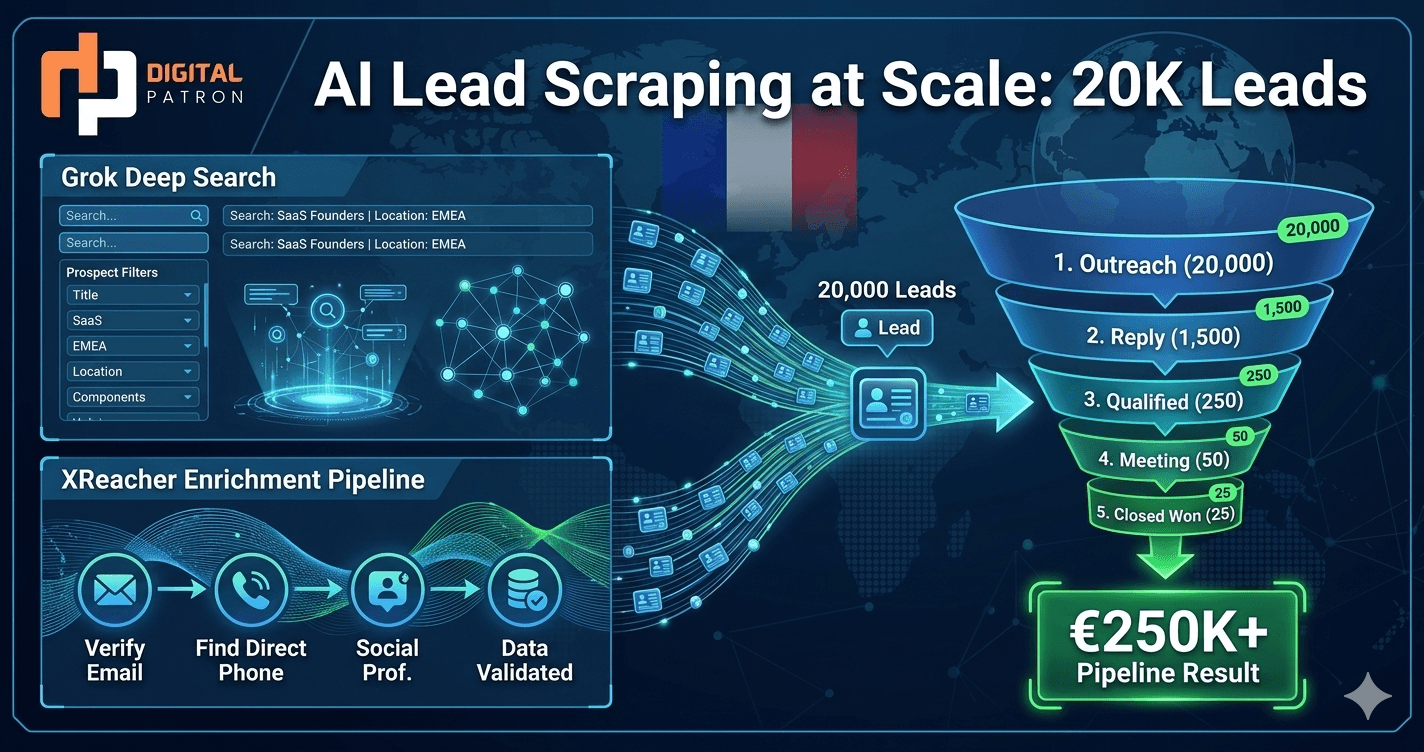
Using Grok + manual verification + XReacher, we built a 20,000-prospect list in 45 days. Here is how it broke down:
| Stage | Volume | Time Investment | Cost (Tools) |
|---|---|---|---|
| Grok research + prompt iteration | 45K raw results | 12 hours | $0 (Grok subscription) |
| Manual verification (quality gate) | 25K → 20K qualified | 28 hours (contract researcher) | ₹12K |
| XReacher enrichment (email + mobile) | 20K records | 2 hours (setup + monitoring) | ₹18K |
| CRM import + warm-up | 20K sequences | 8 hours | ₹8K (warm-up domains) |
Total cost: ₹38K + internal labor (~₹25K equivalent) = ~₹63K to generate a 20,000-prospect list.
Outcome: 4,200 emails opened (21% open rate — 3× industry average for cold email). 680 replies (16% reply rate). 140 qualified meetings booked. Final pipeline generated: €250,000 (converted 32% of meetings to early-stage opportunities).
Cost per booked meeting: ₹450. Cost per SQL: ₹1,400. This is 40× cheaper than hiring SDRs and 6× cheaper than buying leads.
The 5-step lead scraping framework
Step 1: Define your ICP with 4 dimensions (research: 2–3 hours)
Before you open Grok, write down your ICP in four dimensions:
- Job title + seniority (e.g., "Chief Medical Information Officer or Head of Clinical IT at hospital networks")
- Company signals (e.g., "200–500 bed hospital systems" or "recently posted about digital transformation")
- Intent signals (e.g., "active in healthcare forums" or "engaged with competitors on LinkedIn")
- Engagement threshold (e.g., "5,000–500,000 LinkedIn followers" — we filter out ghosts and out-of-role people this way)
For Digital Patron's B2B SaaS clients, this might be: "VP of Sales or Sales Directors (3–8 years tenure) at Series A–C SaaS companies, recently hired in growth roles, active in SaaS founder communities."
Step 2: Craft your Grok Deep Search prompt (iteration: 4–6 hours)
This is where the magic happens. A good Grok prompt is not a keyword list. It is a semantic description of who you want, why, and how to verify them.
Template:
Find [JOB_TITLE] at [COMPANY_TYPE] who have [INTENT_SIGNAL].

Criteria:
- Title must include: [KEYWORDS_1], [KEYWORDS_2]
- Company size: [EMPLOYEES or REVENUE or BED_COUNT]
- Engagement: [SOCIAL_PROOF_THRESHOLD]
- Geography: [REGIONS]
- Engagement threshold: [FOLLOWER_RANGE]

Return: Name, Title, Company, Company Size, LinkedIn Profile, Recent Activity, Location
Real example (Paris MedTech):
Find Chief Medical Information Officers (CMIOs) or Clinical IT Directors at hospital networks in France, Spain, and the UK who have posted or engaged with content about digital health, clinical decision support, or hospital IT modernisation in the last 90 days.

Criteria:
- Title must include: CMIO, Chief Medical Officer (IT), Head of Clinical IT, Director of Health IT, Digital Health Director
- Company: Hospital systems or hospital networks with 200–500 beds
- Company signals: Recent budget allocation to digital health (public announcements, funding, regulatory mandate)
- Engagement: Has posted on LinkedIn, Twitter, or medical tech forums about digital transformation, EHR, interoperability
- Profile strength: 5,000–500,000 LinkedIn followers (eliminates inactive profiles and junior staff)
- Geography: France, Spain, UK
- Exclude: Healthcare consultants, software vendors, recruiters

Return: Name, Current Title, Company, Company Website, Hospital Bed Count, Recent LinkedIn Posts (3 most recent), Location, LinkedIn Profile URL
Run this prompt 3–4 times, refining the language and exclusion criteria based on the results. The first run will return 50% junk; the fourth will be 85%+ usable.
Step 3: Manual verification (the quality gate — 1–2 weeks, outsourceable)
Do not skip this step. Grok is good, not perfect. You will get:
- ~10% out-of-role people (sales reps at hospitals, not CMIOs)
- ~5% deceased or retired profiles (Grok pulls historical data)
- ~5% false positives (people who mentioned the keyword once in 2022 but are not your target)
The fix: hire a freelancer for ₹300–500/day to spot-check 100-record batches. Create a simple Google Sheet with columns: [Name], [Title], [Company], [Verified? Y/N], [Reason for Reject]. Aim for 80%+ approval rate; if lower, iterate the Grok prompt.
For our Paris client, we hired a French healthcare researcher for ₹12K to verify 25,000 records over 2 weeks. Final approved list: 20,000 (80% approval).
Step 4: Enrich with XReacher (email, mobile, verified status — 1–2 days)
You now have 20,000 names and companies. You need email addresses and phone numbers. Two options:
- Apollo — ₹15K/mo, 30–40% match rate on B2B
- XReacher — ₹8K–15K for 20K records, 45–55% match rate, includes mobile
- Hunter.io — ₹20K/mo, 25–35% match rate
For bulk enrichment at scale, XReacher is the tool — it is cheap, fast, and has the highest verification rates in the market. (Digital Patron uses XReacher for all client list enrichment.)
Import your verified names/companies into XReacher, run enrichment, and export as CSV. You will get: primary contact, company email, verified status, mobile (if available), and job title verification.
Step 5: Deploy to your outreach platform with warm-up (1–2 weeks)
Once enriched, your list is ready for outreach. Import into your email automation platform (Instantly, Smartlead, or Zoho Campaigns) with proper warm-up:
- Week 1–2: Send 10–20 emails/day per warm-up domain (build reputation)
- Week 3–4: Scale to 50–100/day
- Week 5+: Full volume (300–500/day per domain)
Do not skip warm-up. A 20,000-record blast from a cold domain will tank your deliverability and get you blocked by Gmail/Outlook within 48 hours.
Tool stack breakdown (and what to buy vs. skip)
| Tool | Cost/Month | Use Case | Alternatives |
|---|---|---|---|
| Grok (xAI) | $168 (Pro) | Initial lead research + prompt iteration | Claude Sonnet, ChatGPT Pro (less effective for semantic search) |
| Apollo | ₹15K | Prospect research + enrichment | ZoomInfo, Hunter.io, Clearbit |
| XReacher | ₹8–15K (one-time for bulk) | Email + phone enrichment at scale | Seamless.ai, RocketReach |
| Instantly / Smartlead | ₹18–25K | Multi-domain sending + warm-up | Zoho Campaigns, ActiveCampaign |
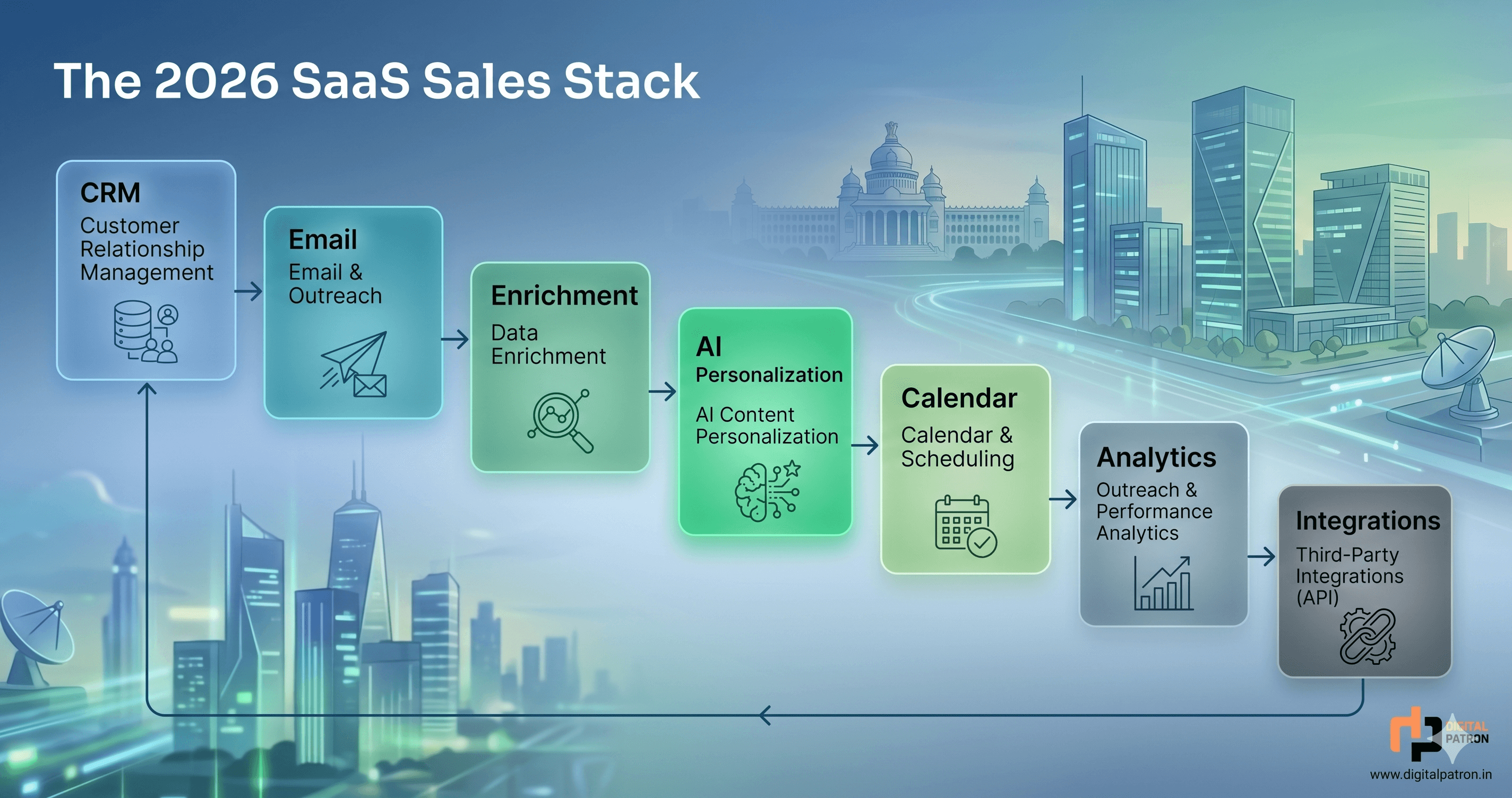
| HubSpot (or Salesforce) | ₹15K–50K | CRM, reply classification, scheduling | Pipedrive, Close.io |
Prompt templates: 6 battle-tested Grok searches
Copy these and adapt to your ICP:
Template 1: SaaS founders in high-growth mode
Find founders or CEOs of Series A–B SaaS companies (funded in the last 24 months) in India who have posted about scaling, hiring, or fundraising on LinkedIn in the last 90 days.

Criteria:
- Title: Founder, CEO, or Co-Founder
- Company age: Series A–B (last 24 months)
- Geography: India (Bangalore, Gurgaon, Delhi, Mumbai focus)
- Engagement: Posted on LinkedIn about growth, hiring, fundraising, or GTM
- Follower range: 1,000–100,000
- Exclude: Inactive for 6+ months

Return: Name, Title, Company, Funding Round (if known), Last Post Date, LinkedIn URL, Location
Template 2: Marketing leaders at e-commerce companies
Find heads of marketing or growth leaders at e-commerce companies with ₹10–100 crore annual revenue who have engaged with PPC, SEO, or brand scaling content on LinkedIn or Twitter in the last 60 days.

Criteria:
- Title: VP Marketing, Head of Growth, Director of Demand Gen, Chief Marketing Officer
- Company: D2C or e-commerce (Shopify, WooCommerce, custom platforms)
- Company revenue: ₹10–100 crore
- Geography: India
- Intent signal: Recent engagement with PPC ads, SEO case studies, brand scaling, or conversion rate optimization content
- Follower range: 500–50,000
- Profile maturity: Joined LinkedIn 3+ years ago (establishes credibility)

Return: Name, Title, Company, Company Revenue (estimated), Last Engagement, LinkedIn URL
Template 3: RevOps and sales operations leaders
Find VP Sales, VP Revenue Operations, or Head of Sales Enablement at B2B SaaS companies who have posted about sales stack, CRM, or revenue operations in the last 90 days.

Criteria:
- Title includes: VP Sales, VP Revenue Operations, Head of Sales, Chief Revenue Officer, Sales Operations Director
- Company type: B2B SaaS
- Company stage: Series A–D (growth stage)
- Geography: USA, UK, Europe (English-speaking regions for outreach)
- Intent: Posted about sales stack, CRM implementation, revenue metrics, or sales enablement
- Follower range: 1,000–200,000
- Recent activity: Posted or engaged within last 90 days

Return: Name, Title, Company, Company Website, Recent Post (excerpt), LinkedIn URL
What not to do: 3 common mistakes that tank lead quality
Mistake 1: Skipping manual verification
Running Grok once and uploading the raw results directly to your outreach platform will get you a 2–5% reply rate instead of 15–20%. Grok is 80% accurate; manual verification gets you to 95%+. Budget 1–2 weeks for this step. It is not optional.
Mistake 2: Not warming up your sending domains
Sending 5,000 emails in one day from a new domain will get you blacklisted within 48 hours. You will burn through your list and waste ₹15K+ on enrichment. Warm up for 4–6 weeks, starting at 10–20/day, and scale gradually. Use a tool like Instantly with multi-domain warm-up to automate this.
Mistake 3: Not segmenting by intent signal strength
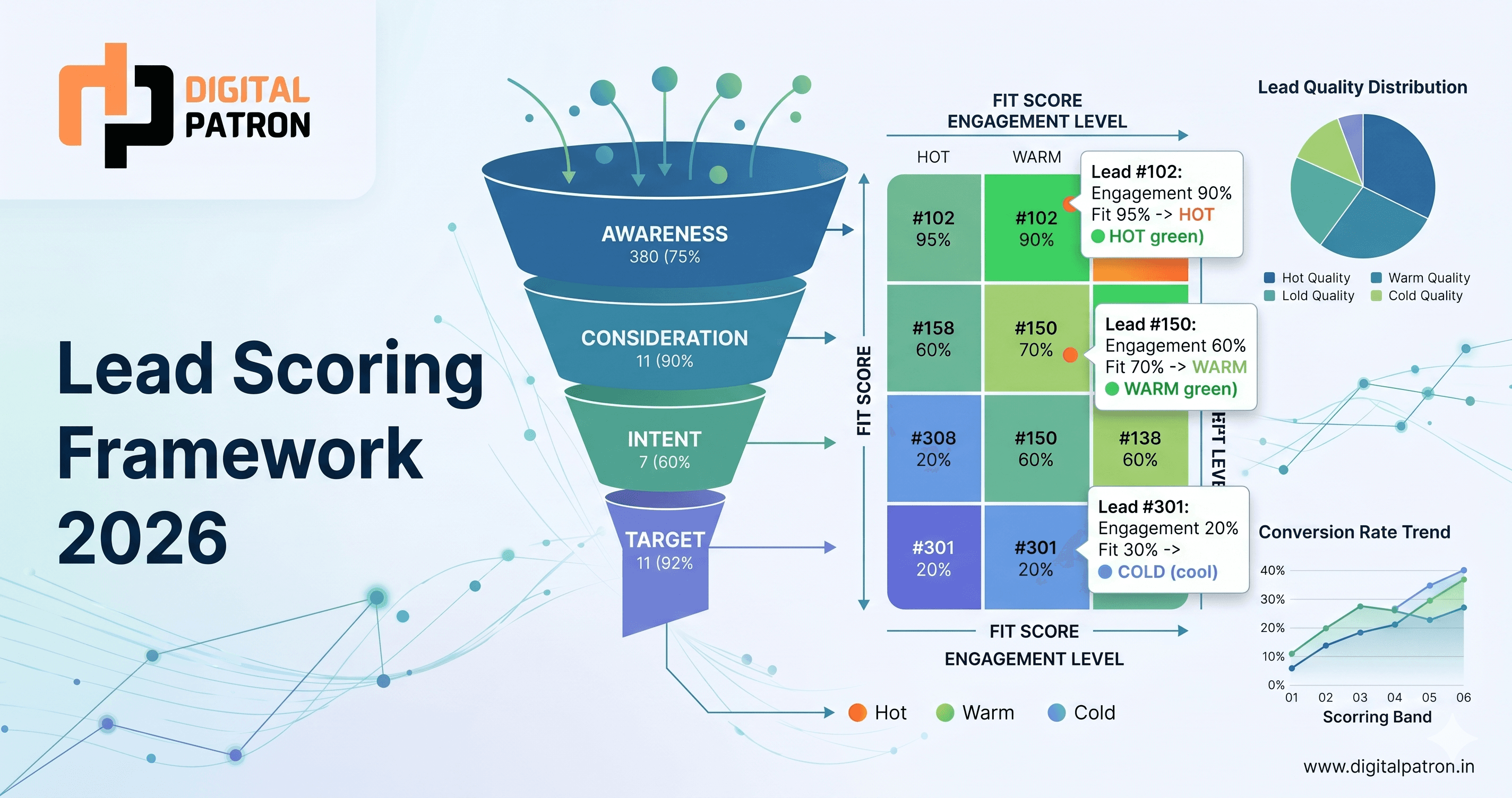
Some prospects in your list have posted about your problem 5 times in the last 90 days; others mentioned it once in 2023. Treat them differently. Send your 20% hottest leads a personalized first-touch email (high effort, high conversion). Send your 80% warm leads a templated sequence with light personalization. This 80/20 split doubles your reply rate because you are matching effort to likelihood-to-convert.
How Digital Patron uses this framework with clients
For our Paris MedTech client, we:
- Ran 6 iterations of Grok prompts until we hit 85%+ approval (16 hours of research)
- Hired a local healthcare researcher to verify 25,000 records (₹12K, 2 weeks)
- Enriched 20,000 verified records using XReacher (₹18K)
- Built a warm-up schedule across 4 dedicated domains (8 weeks total)
- Sent 20,000 personalized cold emails using Claude-powered copy
- Logged all replies in HubSpot, classified by intent, and routed hot replies to a senior AE for outreach
Result: 140 booked meetings in 90 days. €250,000 in pipeline. Highest-ROI sales motion they have ever run.
The 2026 lead generation advantage
If you are still building lists manually, using bought lists with 60% bounce rates, or relying on LinkedIn Sales Navigator alone, you are operating at a structural disadvantage in 2026. Your competitors are scaling lead volumes 10–100× cheaper than you are, and converting them at 3–5× higher rates.
AI-powered lead scraping is not a "nice-to-have" anymore. It is table stakes.
Want to build this stack for your company? Book a lead gen audit with Digital Patron — we'll analyze your ICP, run a test list of 500 prospects, and show you the exact cost per meeting before you commit to a full-scale deployment.